Enju Kunihide

Enju Kunihide
“An interesting artefact”
Or a small treasure from the 2008 Taikai
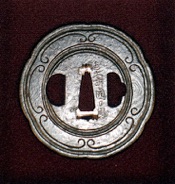
This humble little tsuba came to me at this years To-ken Taikai, among other things I was told I paid “too much” and “its an interesting artefact”, if you like “that sort of thing”, I saw several others pass it up. In spite of this I have always agreed that the first rule of collecting is to collect what you like and this is indeed my sort of thing. Here is some of what I was able to find out about its’ maker, I hope you’ll come to like it too.
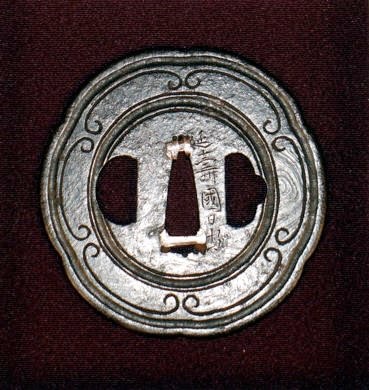
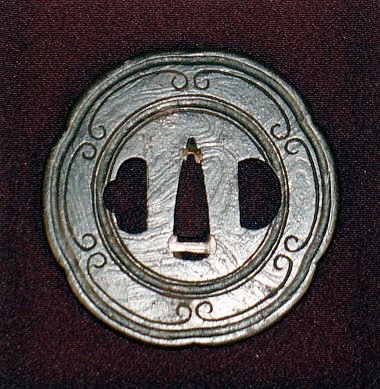
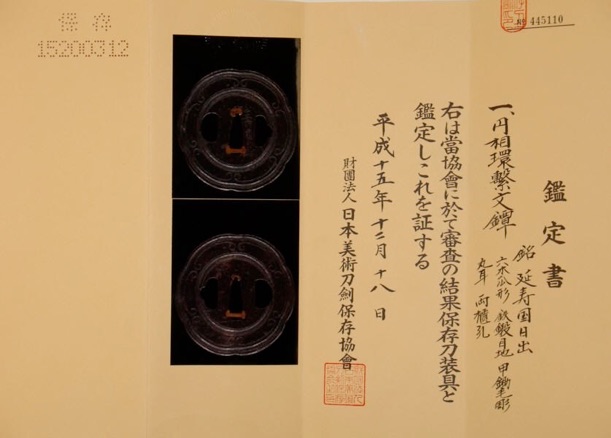
7.16 cm x 7.11 cm x 2.5 mm, the thin plate is iron mokume in a mutsu-mokko-gata shape with kozuka and kogai hitsu-ana, the small nakago-ana has been refit with copper kuchi-beni. The plate has been further treated with simple carved lines in concentric circles and “drawer pull” designs reminiscent of Kamakura style tsuba. There is a simple five character signature, Enju Kuni Hi De and it carrries a Hozon Tosogu Kantei Sho from the NBTHK.
延寿國日出
Just prior to the end of the Tokugawa period Suishinshi Masahide sparked a revival within the world of swordmaking. Many of the students who passed through his gate were encouraged to revive the traditions of their home province. In Kyushu especially it seems it was popular to proclaim descendance from well known schools. So there was Nobukuni Shigekane of Chikuzen, Naminohira Yasuyuki of Satsuma and Dotanuki Munehiro and Enju Kunihide of Higo.
Kunihide was the son of Tanaka Yasaemonnojô Kuninobu 國信 , his given name was Tanaka Jusuke. He first studied sword making under Hoki no Kami Masayoshi of Satsuma, his initial mei was Kuninobu 國延 .
It is not clear just when he went to Edo but it is clear from the record that he developed a close relationship with Masahide. First we know that he took the “Hide” character from Masahide. Second there is a letter from Kunihide which Sekine Masahiko delivered to Masahide on a trip to Edo from Higo.
In the letter Kunihide writes; “Sending you my very best regards. It has been very cold lately but I appreciate very much hearing that you are very comfortably at work in the forge.
As for myself, this autumn I came home (to Kumamoto) but have neglected writing to you. I have forged three or four swords since and even if I say so myself feel that I have done well. It is only because of your instruction, and I must repeat my deep gratitude to you for all that you taught me.
Next Spring I shall present to you one of my humble works for your opinion and as thanks for all that you have done for me should you choose to make the trip down here.
I have been promoted to the position of Metsuke and thus I am now busy forging everyday…”
The third point we can see in his mei, where in his later years he signed Kuni Hi De 國日出 , taking his que from his teacher who sometimes signed his works Masa Hi De 正日出 . Lastly among the names inscribed on the grave marker of Masahide is the name of Higo Enju Kunihide.
He made works in the style of his teacher, mostly shinogi zukuri katana with ko-mokume nagare jihada showing some masame in the shinogi, hamon was typically gunome midare, or Bizen-den style choji-midare and rarely ko-nie deki sugu-ha in the style of his ancestors, the nakago featuring kessho yasuri, marumune and a ha-agari Kuri-jiri.
Signatures include;
延寿國秀 Enju Kunihide
肥後官工延寿國秀
Higo Kankô Enju Kunihide
大神武國秀造之
Dai Jin Bu Kunihide Tsukuru kore
謹 延寿國秀造之
Kin Enju Kunihide Tsukuru kore
延寿國秀謹造之
Enju Kunihide Kin Tsukuru Kore
肥後熊本住延寿國秀作
Higo Kumamoto ju Enju Kunihide saku
肥後国延寿國村末孫國秀
Higo (no) Kuni Enju Kunimura Sue-mago Kunihide
There are dated works from the years;
寛政 Kansei 2 - 1790
享和 Kyowa 2 - 1802
文化 Bunka 1 - 1804
文化 Bunka 4 - 1807
文化 Bunsei 5 - 1822
文政 Bunsei 6 - 1823
文政 Bunsei 11 - 1828
天保 Tempô 2 - 1831
The Kuni Hi De signature is said to be from his later years. However the only dated works from this signature are early in his career, Kyowa 2 (1802) He signed;
東肥國日出 Tô Hi Kuni Hi De
延寿國日出 Enju Kuni Hi De
This begs the question, is this the work of the young smith working in Edo or the practiced hand of an old man working in his hometown of Kumamoto?
If he lived and worked as late as Tempô then we may assume that he was quite long-lived though the actual date of his death is unknown.
He had a son was called Testunosuke and signed his works Kunitoshi he used the name Seiranshi 青藍子 as his Go, but he died rather early in March of Bunsei 13 (1830). His wife died the same year in June. There was a third generation Enju Kunihide, it seems he used the simple Kuni 国 character in his signature and he does not seem to have signed Kuni Hi De as on our tsuba. Among his other students were; his brother Kuniyoshi 國吉 , Kuniyasu 國泰 , Kuniyoshi 國幸 , Dotanuki Kunishige 同田貫國重
and Nagahide 長秀 of Bungo.
From Nihon Toko Jiten Shinto hen Pg 271
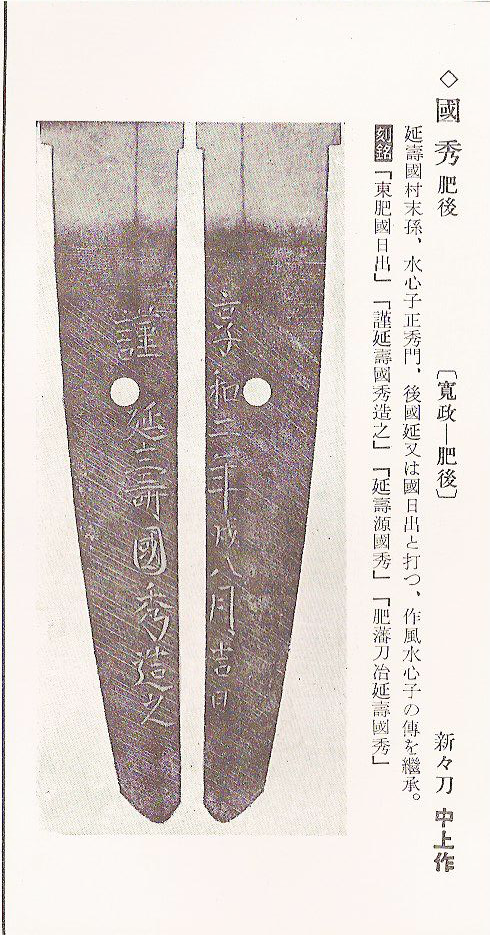
Kin Enju Kunihide tsukuru kore
From Suishinshi Masahide to sono ichimon Pg 337
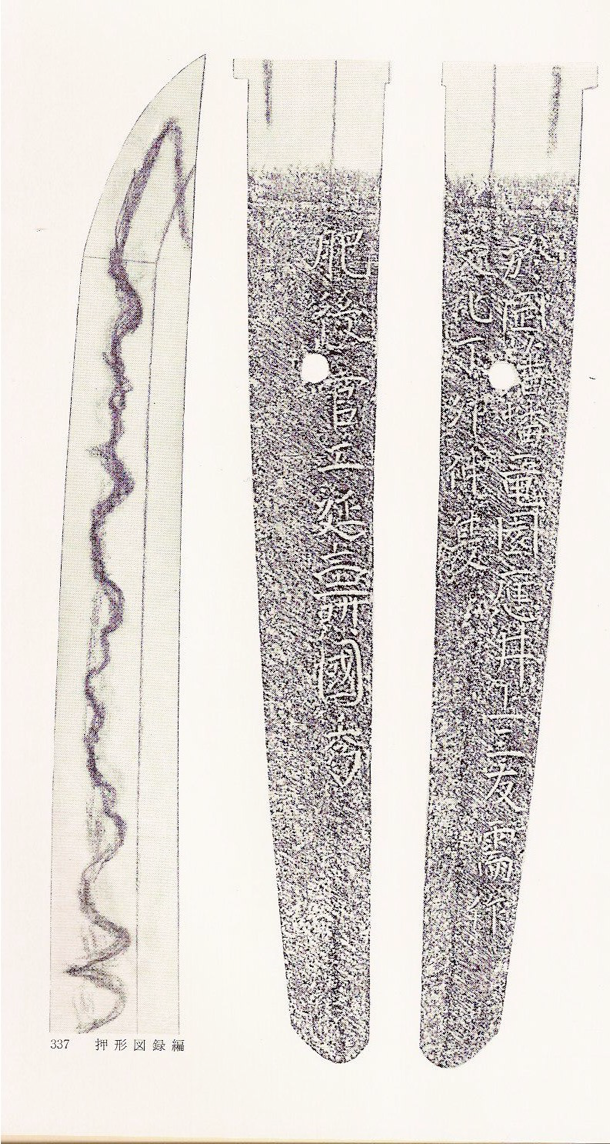
Higô Kankô Enju Kunihide
From Shin-shinto Taikan Pg 138
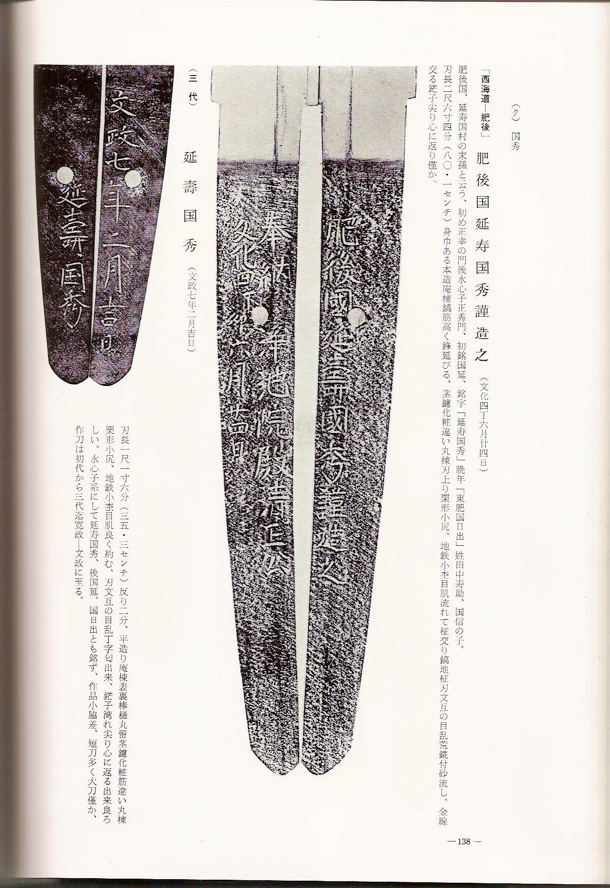
Higô (no) Kuni Enju Kunihide Kin tsukuru kore
Same page
(sandai) Enju Kunihide
from Shin-Shinto Shu by Fujishiro pg 119 (sandai?)
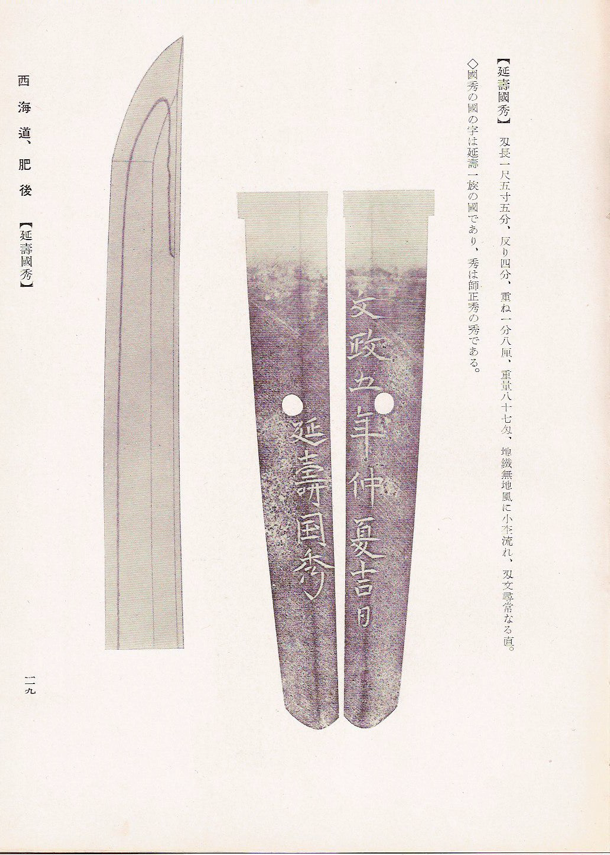
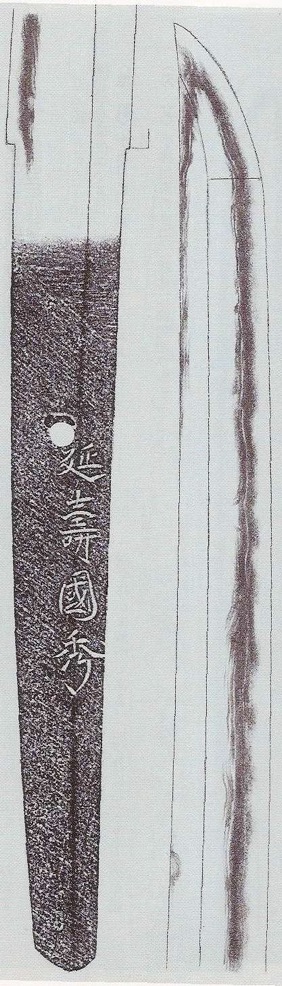
Enju Kunihide
In conclusion, my favorite tidbit from the many sources I referenced was this from Suishinshi Masahide to sono ichimon by Kuroe: “Tsuba of surpassing quality may be seen by this smith (Kunihide) ”. Haynes notes; “He sometimes did katakiri style carving on iron tsuba as well as horimono on sword blades”. I am very happy with my new artefact, although small and slight of weight, when I look upon it I see the blood and sweat of Kunihide along with the heart and soul of his teacher Masahide mixed within each of the swirling layers of it’s forged iron plate.
References;
Nihonto no Kansho to Kantei by Tsuneishi Hideaki – Showa 61
Nihonto Meikan by Homma and Ishii – Showa 50 edition
Nihonto Daihyakka Jiten by Fukunaga Suiken – Heisei 5
Shin Shin-to Taikan by Iikura – Showa 41
Shin Shin-to Shu by Fujishiro - Showa 19
Suishinshi Masahide to Sono Ichimon by Kuroe – Showa 54
The Index of Japanese Sword Fittings and Associated Artists by Haynes - 2001
Sunday, October 31, 2010